Target selection is only the first layer. Cardiac delivery, duration, specificity, reversibility, and safety determine whether a regenerative mechanism can become a real intervention.
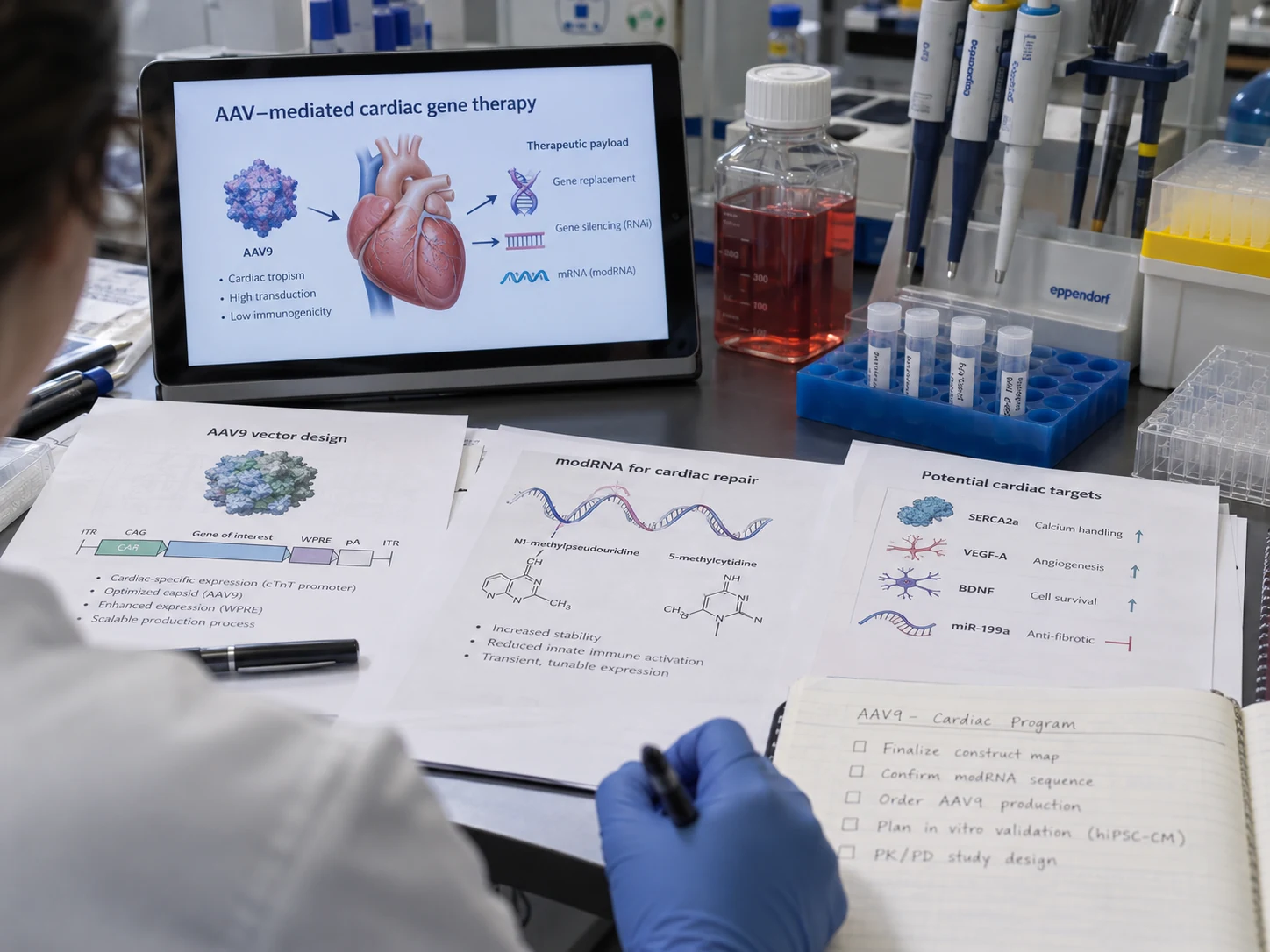
A useful cardiac genetic intervention has to combine biological causality with delivery, dose control, temporal control, tissue specificity, and a credible safety margin. A target that looks strong in a transcriptomic screen can still fail if myocardial exposure is inadequate or if the same pathway creates arrhythmogenic, oncogenic, vascular, or extracardiac risk.
Targets that alter cyclin/CDK control, Hippo–YAP signaling, mitotic checkpoints, or cardiomyocyte maturation programs. Potency is attractive, but incomplete cytokinesis and uncontrolled growth are central risks.
Targets that change fibroblast state, reduce pathological matrix deposition, or drive direct fibroblast-to-cardiomyocyte reprogramming. The aim is tissue replacement without destabilizing repair.
Targets that move cardiomyocytes toward a more permissive redox or metabolic state, or improve survival after ischemic injury. Mechanistic benefit must be separated from generic cytoprotection.
Targets that improve perfusion, endothelial support, or regenerative signaling. New vessels alone do not equal myocardial regeneration, but perfusion can determine whether new tissue survives.
| Modality | Strength | Constraint | Where it may fit |
|---|---|---|---|
| AAV-based expression | Efficient tissue transduction and durable expression in many settings. | Payload limits, immune response, pre-existing antibodies, persistence when reversibility is desired. | Targets needing sustained myocardial expression when the risk window is acceptable. |
| Modified mRNA / LNP | Transient expression, repeatable design, no genomic integration. | Delivery efficiency, innate immune activation, short exposure. | Proliferative programs where duration should be tightly bounded. |
| miRNA / oligonucleotide | Can modulate gene networks or specific transcripts. | Stability, biodistribution, cell uptake, off-target sequence effects. | Network-level control or repression of inhibitory programs. |
| Genome / epigenome editing | Potentially durable or locus-specific control. | Editing accuracy, delivery, irreversibility, complex safety assessment. | High-confidence targets where durable change is truly necessary. |
For the concept-stage VB-101 program, the useful computational question is not whether a target correlates with regeneration. It is whether independent evidence supports a causal role, whether the mechanism survives human-cell context, whether an exposure window can be engineered, and whether the expected benefit justifies the biological risk.